The Camino de Santiago is an experience everyone should have at least once in their lifetime, but to truly enjoy it, it's also crucial to come prepared. And when you finish a stage, having walked for over 6 hours, your feet ache, and all you can think about is showering and lying down, it's incredibly important that your backpack weighs as little as possible.
That's why, deciding what to pack for the Camino de Santiago when camping isn't about stuffing your backpack with everything you "might need," but quite the opposite: bringing only what's essential and leaving room for improvisation. The difference between enjoying the stages or suffering through them is often decided before you even leave home.
In this guide, we provide a realistic and lightweight checklist to make your #CampStories as light as possible: the essentials for rest, hygiene, and foot care, the extras that are truly worth their weight, and the mistakes almost everyone makes the first time.
Target Weight Based on Your Camino Type
Doing the last 100 km is not the same as walking the entire Camino, and your backpack should reflect that. So, to help you prepare your journey and then simply walk and enjoy, we've provided guidelines for what your backpack should weigh.
- Final Stages (5-7 days): starting from Sarria on the French Way, from Tui on the Portuguese Way, or from Ferrol on the English Way are the most popular options to obtain the Compostela. Since it's only a few days and usually during a good season, you can be very precise: clothes for two or three days and little else.
- Full Camino (weeks): a French Way from Saint-Jean-Pied-de-Port is almost 800 km and over 30 stages. Here, more weather changes and wear and tear come into play, so not overpacking is even more crucial.
As a reference, many pilgrims aim for their loaded backpack not to exceed 10% of their body weight: in summer, when sleeping in hostels, campsites, or bungalows, it usually hovers around 6 to 8 kg.
Camping vs. Hostel on the Camino
The great advantage of camping on the Camino de Santiago you can choose how you sleep. Whether you sleep in a room on nights when your body craves a real bed or if you prefer to treat yourself to a glamping experience on the Camino, in a cabin with a jacuzzi when your legs need a comfortable break.
Unlike a classic bunk-bed hostel, this significantly changes what you pack in your backpack. So we recommend knowing exactly where you'll be sleeping before you pack, because it will greatly influence the weight and type of luggage.
Bedding, towel, and shower
In a hostel, you sleep in a bunk bed, and you provide your own sleeping bag or, in summer, a lightweight sleeping bag liner. If you're camping in a tent, the key to a good rest is a quality insulated sleeping mat: it separates you from the ground and, most importantly, insulates you from the cold and dampness of the ground. And if you sleep in a bungalow or glamping accommodation, bedding is included, so you'll save weight and bulk, leaving room for all the #CampStories you'll bring back.
If you sleep in a hostel or a tent, you absolutely must bring: a microfiber towel (takes up no space and dries quickly) and flip-flops for shared showers – your feet will thank you.
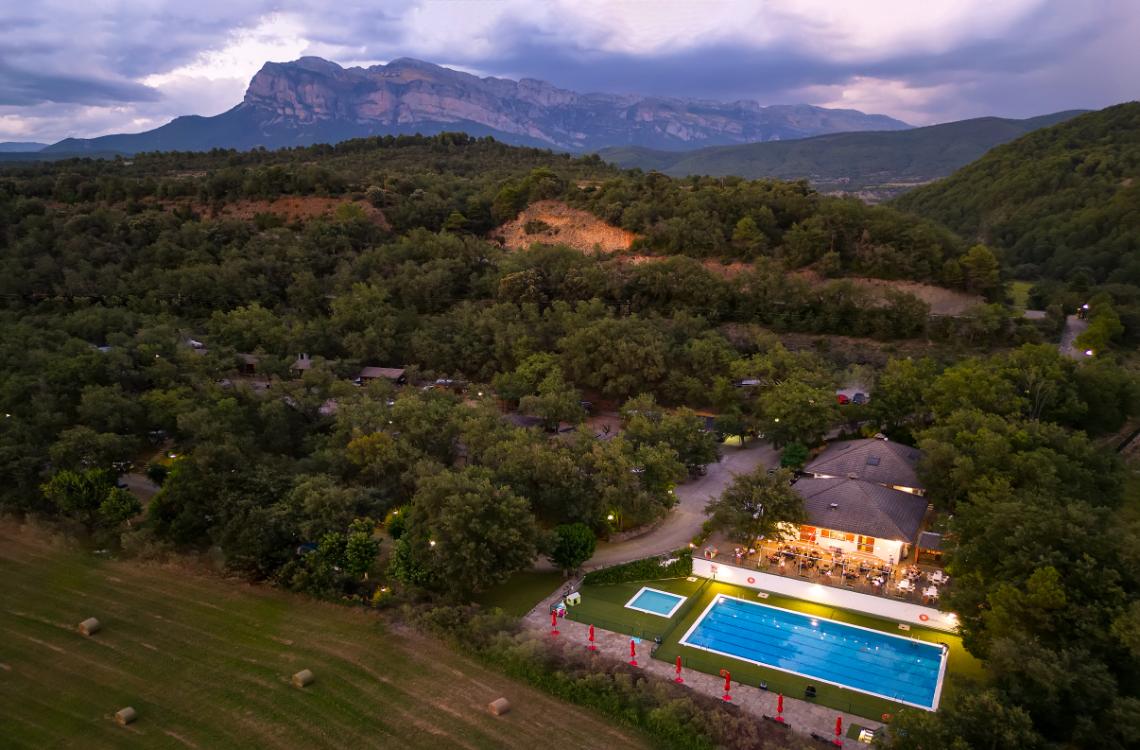
At HolaCamp Camino, towels are included, and each room and cabin has its own private bathroom, so it's very important to plan your trip well and choose what type of accommodation you'll stay in before you start walking, to avoid carrying unnecessary weight.
Charging phone and headlamp
Power outlets are precious and almost always scarce: in hostels and campsite bathrooms, there are few and they're fought over. And although each cabin at HolaCamp Camino has several outlets, here are some precautions that can save you a lot of trouble:
- A power bank of about 10,000 mAh will get you out of any bind for several days.
- A charger with multiple USB outputs so that a single outlet can power your phone, watch, and headlamp simultaneously.
- A lightweight headlamp. It's not optional: early morning departures are in the dark, and if you're sleeping in shared dorms, you can move around at night without turning on everyone's light. And using your phone's flashlight drains the battery precisely when you need it most.
Essential Checklist (Ultralight Version)
Seriously now, this is what you absolutely cannot forget in your backpack. If something isn't here or on the extras list below, ask yourself if you really need it.
Sleep and Rest Essentials if you sleep in a hostel or camp
- Lightweight sleeping bag, or a sleeping bag liner if you're going in the middle of summer.
- Sleeping mat (if sleeping in a tent).
- Inflatable pillow or a pillowcase you can stuff with clothes (optional, but weighs very little).
- Earplugs and eye mask: truly resting in an unfamiliar bunk or with camping noise is worth more than almost anything else.
- Headlamp with spare batteries.
Hygiene and foot care
This is where you make or break the Camino. Your feet are the most important thing: take care of them.
- Microfiber towel and shower sandals.
- Minimal toiletry bag: multi-purpose solid soap (for you and for washing clothes), toothbrush, travel-size toothpaste, and a small deodorant.
- Seamless technical socks, two or three pairs. Cotton chafes and takes a long time to dry; forget about it.
- Blister prevention kit: petroleum jelly or anti-chafing cream before walking, blister plasters, fabric adhesive tape, and small scissors or nail clippers.
Realistic first-aid kit (without carrying a whole pharmacy)
Don't carry an entire pharmacy: there's one at each stage. Just bring enough so you don't get stranded in the middle of the afternoon.
- Your personal medication, first and foremost.
- Pain reliever (paracetamol or ibuprofen), blister plasters, antiseptic, adhesive tape, and a bandage.
- Salts or electrolytes for rehydration on hot days.
- Sunscreen and, depending on the area and season, insect repellent.
Essentials if you're staying at HolaCamp Camino
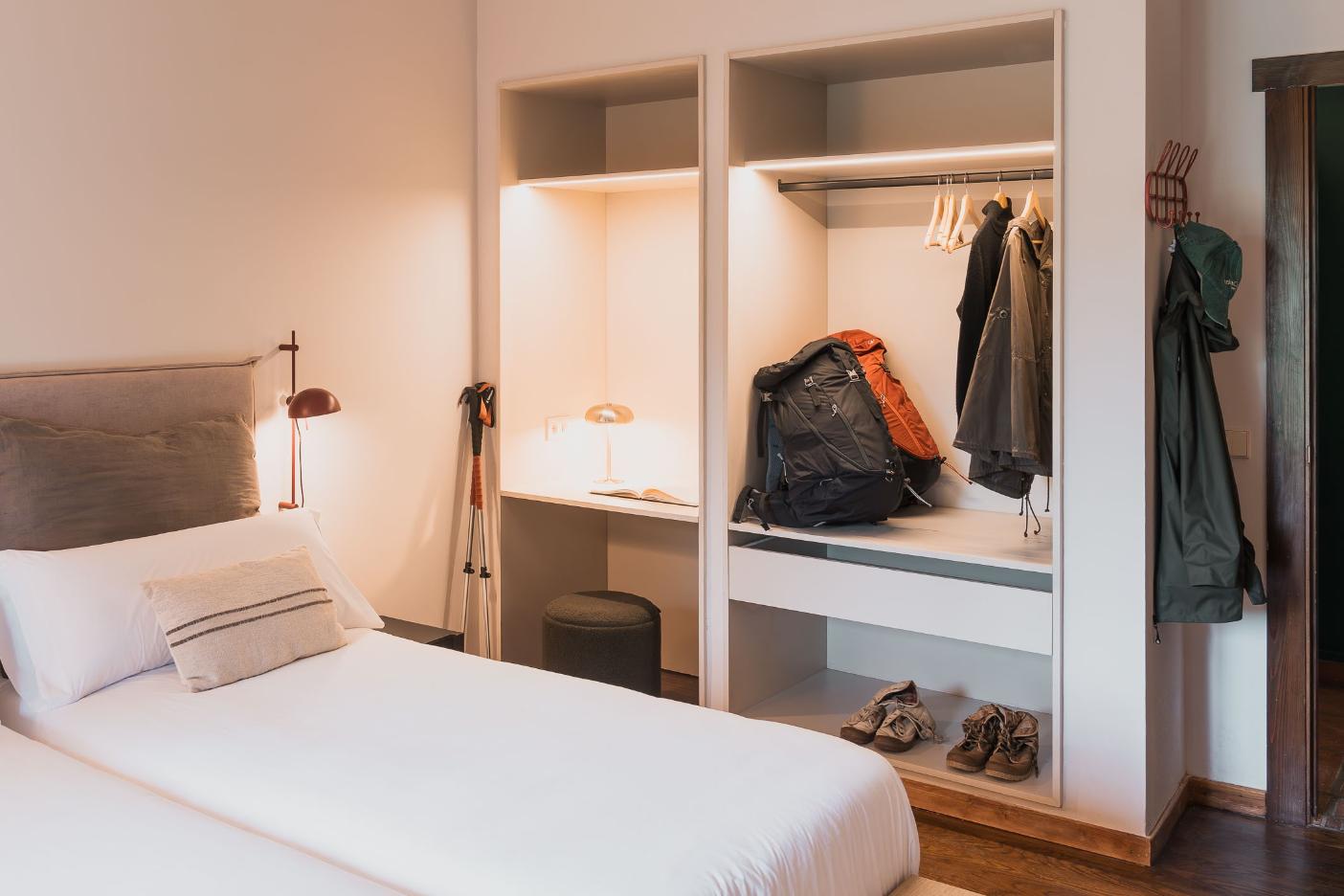
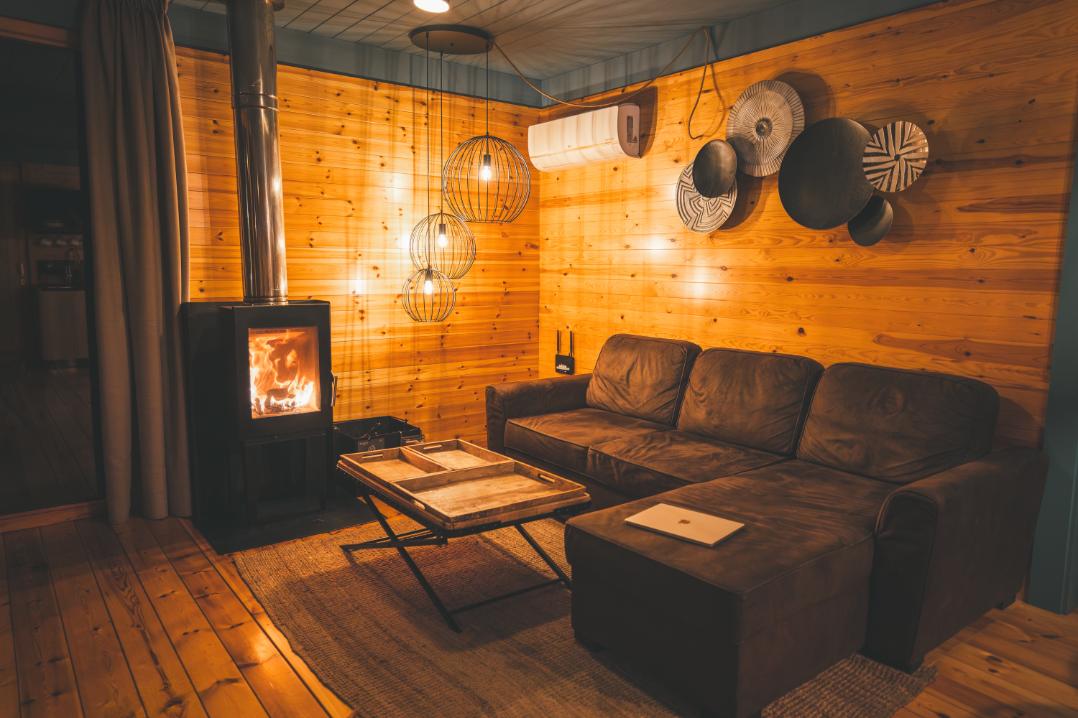
At HolaCamp, we believe in surrounding ourselves with nature without sacrificing comfort. That's why all our accommodations include sheets, pillows, towels, a private bathroom, and soap, so you don't have to carry any more weight than absolutely necessary. We've put together a very short list of essentials you'll still need in your suitcase, even if you're staying at HolaCamp Camino:
- Headlamp with spare batteries.
- Toothbrush, travel-size toothpaste, and a small deodorant.
- Seamless technical socks, two or three pairs.
- Blister prevention kit: petroleum jelly or anti-chafing cream for before walking, blister plasters, fabric tape, and small scissors or nail clippers.
- Your personal medication
- Pain reliever (paracetamol or ibuprofen), blister plasters, antiseptic, medical tape, and a bandage.
- Salts or electrolytes for rehydration on hot days.
- Sunscreen and, depending on the area and season, insect repellent.
Worthwhile extras
And since we've freed up some space in your suitcase, you might consider bringing a few extras. Not every extra is dead weight. These items earn their spot because they can transform your Camino #CampStories from ordinary to unforgettable:
Good rain gear, clothes pegs, dry bag
- Rain jacket or poncho that also covers your backpack. In Galicia, it can rain at any time of year, including summer, so this isn't an accessory: it's what makes the difference between a wet stage and a disaster.
- Dry bag (or sturdy trash bags) to line your backpack from the inside. It keeps anything that can't get wet dry.
- A pair of clothespins or safety pins to hang anything still wet from your backpack so it can finish drying as you walk.
- Trekking poles. Your knees will thank you for them on long descents.
- Reusable water bottle. There are fountains along the way; refilling weighs less than buying.
Common mistakes (and how to avoid them)
That "just in case it gets chilly" sweater, the second book, your entire toiletry bag from home... all of that adds weight to every step of your day.
The good news: there's life on the Camino. Pharmacies, supermarkets, fountains, and shops are available on almost every stage. So, think of it this way: what you lack, you buy; what you have too much of, you drag.
Almost all packing mistakes are repeated trip after trip. So, to prevent the same from happening to you, here are our mistakes:
Duplicating clothes, packing "just in case"
- Duplicating clothes. Two outfits for walking and one for sleeping are enough: you wash them every evening when you arrive. Five t-shirts are three too many.
- The "just in case" items. The second jacket, extra footwear, the thick book. If you're not going to use it in three days, leave it out.
- Breaking in new boots on the Camino. New footwear is synonymous with blisters. Start wearing them weeks beforehand so they can adapt to your feet.
- Carrying too much food and water. You'll constantly find places to eat. Carrying extra provisions only adds unnecessary weight.
Mini Buying Guide
If you're going to buy anything new before you set off, make sure it's a well-considered purchase. These decisions have the biggest impact on how well you sleep and how you cope with each stage of the journey.
What to choose if it rains (and you don't want to suffer)
- Rain: A poncho covers both your body and backpack at once and ventilates well, but it can become uncomfortable in windy conditions. A breathable rain jacket plus a backpack cover is more versatile. For humid areas like Galicia, many people carry both in lightweight versions.
- Footwear: For most people and in summer, a breathable, quick-drying hiking shoe performs better than a heavy boot. If you're going during the rainy season, consider one with a waterproof membrane; we don't want walking with wet feet to spoil this unique experience.
- Sleeping Bag: For a humid Camino, synthetic filling is more forgiving than down, as it insulates even when wet and dries faster. Choose a comfort temperature appropriate for the season.
- Backpack: 30-40 liters is plenty if you're sleeping in a hostel, bungalow, or glamping; only go up to 45-50 if you're carrying a tent. A good fit around the hips is more important than the liter capacity.
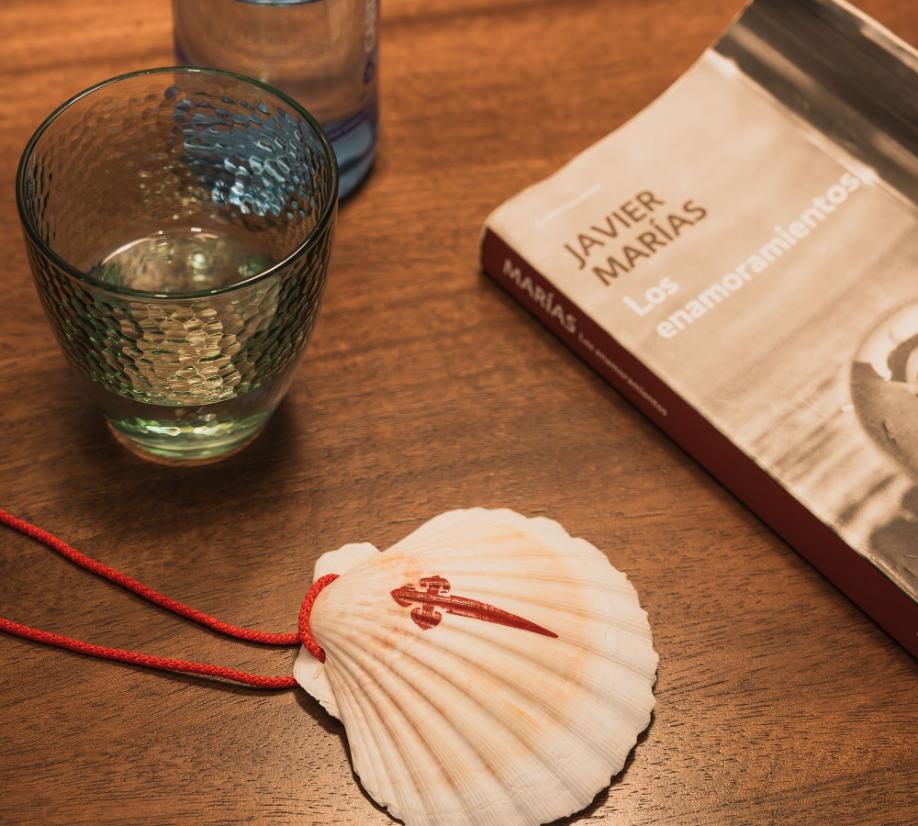
The Camino rewards those who travel light. The less you carry, the more energy you'll have for your back, knees, and mind, leaving you free to focus on what truly matters: the scenery, the people you meet, and that feeling, upon reaching Santiago de Compostela, of having walked every kilometer on your own two feet. Plan with that in mind, and you'll return with the best #CampStories from the Camino: the ones that don't weigh you down.
Frequently Asked Questions
Do I need a sleeping bag if I'm sleeping in a bungalow?
No. HolaCamp Camino bungalows and glamping accommodations include bedding and towels, so you can save yourself the trouble of bringing a sleeping bag. If you're alternating between sheltered camping nights and hostels, a lightweight sleeping bag liner is a good versatile option for hygiene and comfort, with hardly any weight.
What should I do with wet clothes?
As soon as you arrive, wash and wring them out thoroughly (the more you wring, the faster they'll dry) and hang them in an airy spot. Anything that doesn't fully dry can be clipped to your backpack the next day to air out as you walk. Keep wet items separate from dry ones in a waterproof bag, and, a golden rule, never put away a damp sleeping bag: it's the quickest way to sleep poorly and for it to develop an odor. At HolaCamp Camino, you can dry all your belongings inside the cabins thanks to their air conditioning and heating.